 Organic & Natural Business magazine
“Best time in decades” for Scottish farmers to go organic as funding window opens
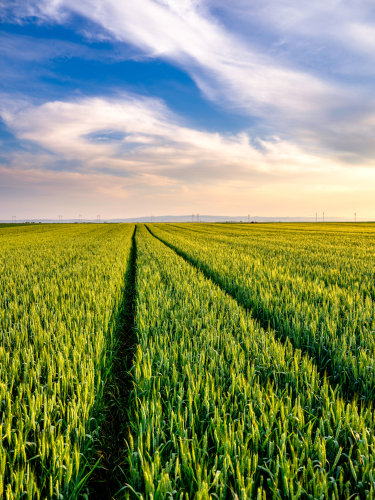
Farmers are being encouraged to apply for funding to convert to organic as Soil Association Scotland says it is the best time in decades to make the switch.
The window for the Agri Environment Climate Scheme (AECS) opens today (February 23), just weeks after the UK’s first nationally funded Scottish Organic Action Plan was launched by Scotland Food and Drink. The plan was launched to help meet the Scottish Government’s goals to boost organic farmland.
The annual opportunity closes on June 22 for combined applications and on July 31 for organic farmers. It is set to contribute to the Scottish Government’s goal of doubling organic farmland to more than 200,000 hectares this year. In addition to AECS, organic farmers and crofters will automatically be eligible for government support via the Basic Payment Scheme. Organic systems tick the animal health and welfare and integrated pest management areas from the whole-farm plan, due to requirements in organic for farmers to deliver high animal welfare and use natural solutions over pesticides.
Soil Association Scotland Co-Director, David McKay, commented: “In the past few years we have seen a rise in farmers seeking organic certification. This is tied to multiple reasons, from consistent policy support for conversion, high level political targets for growing organic land, to consumers increasingly becoming aware of the benefits of organic products. Recent statistics reveal that in Scotland, while the market share is still small, organic food and drink has grown by 20.6 er cent in five years. We believe right now is the best time in decades for farmers in Scotland to grab onto a market that is only growing.”
Sam Parsons, Farm Manager at Balcaskie Estate in Scotland, converted the farm to organic in 2016 and said the transition to organic had proved a success: “Economically, we are performing even better than our conventional system. We’re doing that whilst increasing employment, improving soil quality and biodiversity, and over time we expect profitability to increase further. Organic farming requires more planning, but you can also afford to take more gambles as there is lower risk and more variable outcomes in terms of yield.”
Soil Association Scotland and Soil Association Certification will be supporting the Organic Action Plan with a series of activities to help develop new markets to improve the accessibility of organic. This will include working with retailers and public settings to increase the range of Scottish organic food products available in stores, schools and hospitals across the UK. Work will also involve the development of a ‘basket’ of commonly bought food products that are grown in Scotland but have limited or no local or organic supply chains into the wholesale market, with a view to breaking down those barriers.