Posted by admin on July 9, 2019 · Leave a Comment
Promotion
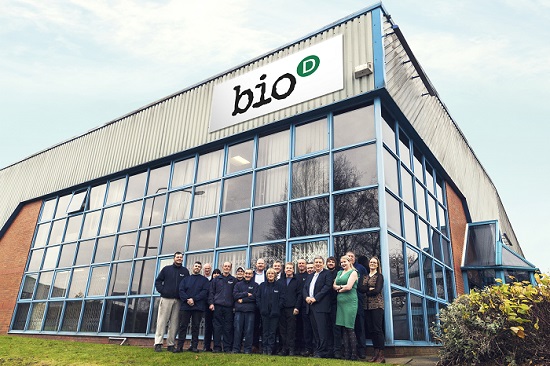
Green cleaning company, Bio-D, is marking three decades in business.
The company, based in Hull, has been at the forefront of environmental innovation for the last 30 years. Since launching in 1989, its products have always been manufactured in Hull and are sold by selected independents, Oxfam stores, and online.
Managing Director, Lloyd Atkin, joined Bio-D in 1997 and took over from founder, Michael Barwell, when Michael retired in 2010.
Lloyd commented: “Bio-D was born after Michael realised that many of the ingredients found in the industrial products he used in his job cleaning commercial ships were also in household cleaning products. He was shocked as the industrial cleaners he used at work required heavy-duty safety equipment, including a respirator, to be worn.
“He decided to look for naturally-derived alternatives that would clean safely and effectively and Bio-D began. That is why to this day, we only use plant-based ingredients.”
Bio-D’s commitment to protecting the planet has seen the business win a number of awards and accreditations; it was one of the first members of Cruelty Free International, which aims to end testing on animals, and The Vegan Society. Bio-D’s fragrance-free range has also been endorsed by Allergy UK. It has also achieved the ISO 14001 standard, which means it puts environmental management at the heart of what it does to achieve sustainable success and is a member of The Ellen MacArthur Foundation’s global commitment on plastic, which sees businesses pledge to use an average of 25 per cent recycled content in their plastic packaging by 2025. However, Bio-D set its own higher target of 75 per cent and has already reached this, years ahead of schedule.
“We have always worked hard to ensure what our products go into are just an eco-friendly as what goes into our products. For example, we have been offering refills for more than 25 years and have pioneered the use of recycled plastic in packaging in the cleaning sector,” Lloyd added. “As a team, we’re really proud to be working to help protect the planet and we look forward to the next 30 years when we believe going green will become a priority for more and more of us.”
Buy Bio-D from selected independents, Oxfam stores or online at www.ocado.com or www.biodegradable.biz
Posted by admin on July 8, 2019 · Leave a Comment

New data has revealed that worldwide organic food and drink sales surpassed the £100bn mark for the first time in 2018.
The research from Ecovia Intelligence shows that global sales increased by six per cent to $105bn last year, with the largest markets being North America and Europe.
According to the new report, Global Organic Food & Drink Market Trends & Outlook, the combined revenue share of these two regions is 90 per cent. Although sales remain concentrated in the western world, the share has declined from 97 per cent in 2005. A number of countries with a strong tradition of exporting organic crops are now developing strong internal markets, including China, India and Brazil.
In terms of country markets, Ecovia found that the US has the largest market for organic food and drink, comprising about 45 per cent of global sales. The German, French, Italian and Canadian markets are the next largest. In terms of market share, Denmark leads with almost 14 per cent share of retail food sales. The highest spenders of organic products are in Switzerland, Denmark, Sweden and Austria.
Ecovia commented: “Rising consumer awareness of organic products and widening availability are two major drivers of global growth. Distribution of organic foods is increasing in supermarkets, discounters, drugstores, pharmacies, and the catering and foodservice sector. Organic ingredients are being used in a growing number of European and North American foodservice establishments. Chained outlets, including McDonald’s and Pret A Manger, are also making commitments to organic product sourcing.”
It was also found that retailer private labels are wielding great influence in the organic food industry, with all leading food retailers in North America and Europe marketing organic foods under private labels.
However, the market share of organic foods remains below one per cent in countries outside Europe and North America.
According to Amarjit Sahota, Founder of Ecovia Intelligence, which has been tracking the global organic products market for over 20 years, there are many challenges ahead. The first is demand concentration; organic agriculture is now practiced in 181 countries, however, the bulk of sales are from the affluent countries. Another challenge is the growing number of national and private organic standards; almost 100 countries now have national standards. Outside the major ‘organic trading blocks’, there is no harmonisation of organic standards and very few equivalency agreements. There is also growing competition from the growing plethora of sustainability schemes and ethical labels. Organic remains the premier and dominant eco-label in the food industry, however, adoption rates for many agricultural commodities are lagging.
The matters will be discussed at forthcoming events hosted by Ecovia Intelligence. Find out more at www.sustainablefoodssummit.com
Posted by admin on April 25, 2019 · Leave a Comment
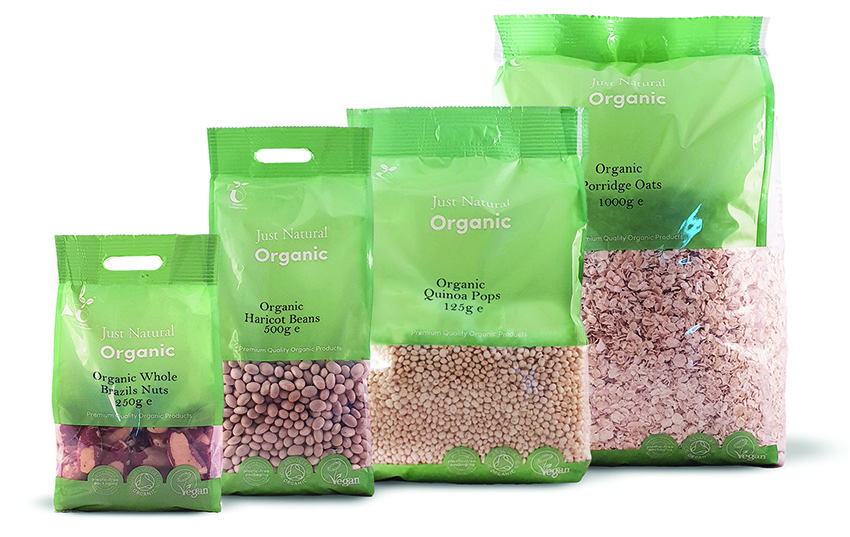
The Just Natural food brand has signalled its commitment to waste reduction with the launch of new plastic free packaging.
The range of Just Natural products, including nuts, seeds, oats, and dried fruits, is now available in certified plastic free packaging by now being packaged in certified compostable packaging.
Just Natural says it is committed to reducing its carbon footprint.
Posted by admin on April 20, 2019 · Leave a Comment
The Environment Secretary has published plans to overhaul labelling laws to provide consumers with clearer information on the food they buy.
Subject to a consultation, Michael Gove MP has published plans which would see food outlets selling pre-packaged food directly for sale required to follow new rules designed to give the UK’s two million food allergy sufferers greater confidence in the safety of their food.
Under current rules, food prepared on the premises in which it is sold is not required to display allergen information on the package – but the proposed rules could go as far as seeing full ingredients labelling required by law.
The moves follow the tragic death of Natasha Ednan-Laperouse, the teenager who died after suffering an allergic reaction to a Pret a Manger baguette.
Gove explained: “Natasha’s parents have suffered a terrible loss, and I want to pay tribute to Nadim and Tanya for their inspirational work to deliver Natasha’s law. We want to ensure that labels are clearer and that the rules for businesses are more consistent – so that allergy sufferers in this country can have confidence in the safety of their food. Many businesses are already bringing changes on board independently, and in the meantime, they should continue doing all they can to give consumers the information they need.”
Food businesses and allergy sufferers are now being invited to have their say on four options put forward to improve the way allergy information is provided for these foods.
Foods Standards Agency Chairman, Heather Hancock, added: “It’s essential for those of us with a food allergy or intolerance to know that we can trust the food we eat. Accurate and reliable labelling is vital, and this consultation is firmly aimed at improving the confidence we have in it. In recent years, choice, trust and availability has really improved for people with food allergy. We want those improvements to continue, so it’s important that we hear from everyone affected, as part of this consultation. We’re determined to keep on making life better for you.”
Carla Jones, CEO of Allergy UK, continued: “We welcome this announcement and the commitment shown by the Environment Secretary on this issue. At Allergy UK, we believe that whilst those living with allergies must be vigilant on their own behalf, the broader food industry needs to do more than just the bare minimum when it comes to catering for the allergic community. We encourage all those living with allergies to engage with this consultation to ensure their views on this important issue are heard.”
In other labelling news, new research has revealed that UK consumers are seeking clarity from retailers as one in four poeple purchase foods excluded from the diet due to poor labelling.
According to Spoon Guru, 55 per cent of UK consumers have unintentionally consumed food restricted from their diet, with the number one reason being that over two thirds (70 per cent) of respondents have been served the wrong food as an error by the waiting staff in bars and restaurants. Meanwhile, 42 per cent listed poor food labelling as the second most common reason for purchasing incorrect products.
Furthermore, 99 per cent of UK consumers believe retailers have a responsibility to be transparent about food ingredients, regardless of current legislation, 94 per cent support new regulations concerning better food labelling and 83 per cent of UK consumers believe technology will play a key role in improving food ingredient transparency.
The worst affected were those trying to reduce salt, fat or sugar intake, with 55 per cent saying they suffer the most from vague or non-existent ingredients labelling when trying to find the right products. Additionally, 70 per cent of shoppers with severe allergies or intolerances indicated that they struggle to identify the right food for their dietary needs (53 per cent for vegans specifically).
The data is calculated relative to the population.
Posted by admin on April 15, 2019 · Leave a Comment
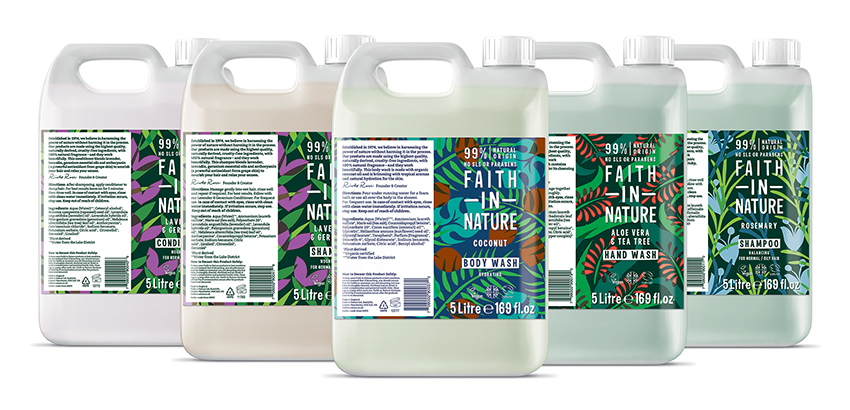
A new recycling scheme has been launched by natural beauty brand, Faith in Nature.
Any customers with empty Faith in Nature 5L container(s), can now send them back to the company’s headquarters in Radcliffe, Manchester, where the empty containers will be cleaned and reused in the Faith in Nature supply chain.
The company has used recycled plastic for its packaging for many years and the plastic it uses is widely recyclable but it recognises the need to adapt and become even greener.
Joy Parkinson, Chief Executive Officer, explained: “At Faith in Nature, we are very aware of the impact of plastics on the environment and are always looking at ways to reduce our waste consumption to help our planet. Our new 5L recycling initiative is the perfect way to get our loyal customers involved and on board.”

 Organic & Natural Business magazine