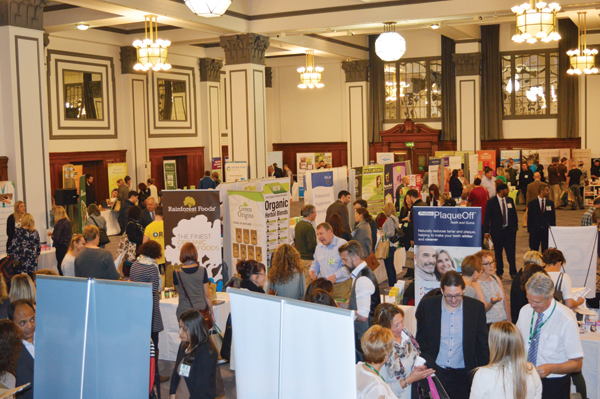
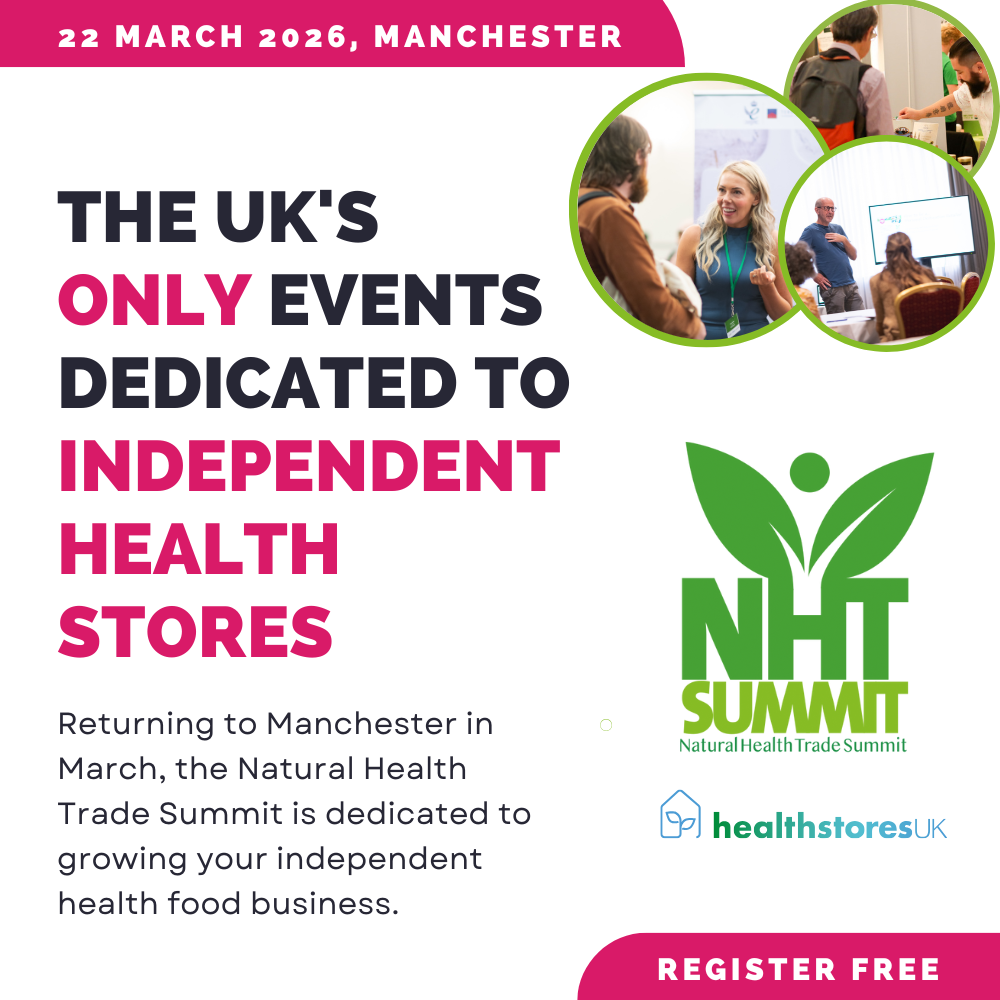
Registration is now open for the Natural Health Trade Summit 2017 in what promises to be its biggest year to date.
The one-day trade event takes place at The Principal Hotel, formerly The Palace Hotel, in Manchester on October 22, and is held in association with the National Association of Health Stores (NAHS).
This year’s event, the third time it has taken place, will be bigger than before, with a newly expanded exhibition space upstairs to cater to demand. This will be in addition to the already established exhibition downstairs.
With more exhibitors than ever, across a range of sectors, including organic food and bodycare, the event will also once again play host to a selection of roundtable events, being held throughout the day on a range of topics.
Sales Director, Ruth Gilmour, commented: “We are proud that the NHT Summit has become an essential date in the industry’s calendar, being the UK’s only event dedicated entirely to the independent health food industry.
“Celebrating all that’s good about the industry, visitors can enjoy roundtable discussions tackling the hottest topics in retailing, over 100 exhibitors showcasing their new products and show-only discounts and plenty of opportunities to meet and network. We are excited to be able to grow the show this year, and we look forward to welcoming you all.”
And take it from retailer, Joanne Hill, from Amaranth, in Stockport, who visited last year and commented: “We are full of ideas after the Natural Health Trade Summit! It’s a lovely place to catch up with suppliers old and new.”
Registration is free at www.nhtsummit.co.uk and we are encouraging all readers of Organic & Natural Business to attend this important annual event. And for retailers looking to make a weekend of it, there are discounted hotel rates at all local hotels; visit www.reservation-highway.co.uk/nht17 to book. If you are planning to stay, we recommend booking your hotel as soon as possible as rooms are limited and sold on a first-come-first-served basis.
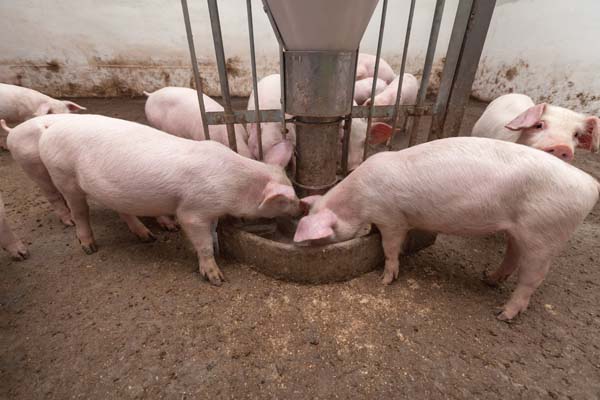
The Soil Association has raised its concern at the continued overuse of farm antibiotics across Europe.
New data from the European Medicines Agency (EMA) has revealed that many European countries are failing to put an end to massive overuse of antibiotics in farming, with use of antibiotics in Europe remaining more than twice as high in animals as in humans.
The O’Neill Review on antimicrobial resistance, commissioned by the UK Government, recommended that high-income countries should aim for a short-term target of 50mg of antibiotic per kg of livestock, however, the EMA shows that the average European level of use is over three times higher at 152 mg/kg.
In the 25 European countries which provided comparable data, sales of farm antibiotics per unit of livestock went down by just two per cent in 2014 compared with 2013.
The EMA data revealed that more than 91 per cent of European farm antibiotics are used for mass medication in feed or drinking water. A large proportion of this is for routine disease prevention in intensively farmed pigs and poultry. In contrast, in Sweden, where there is no routine medication, 90 per cent of farm antibiotic use is for individual treatments. Antibiotic use in the British livestock in 2014 was at similar levels to 2013 and significantly below the EU average, at 62 mg/kg. However, the main reason for apparently quite low consumption is that, compared with other countries, the UK has a very high proportion of low-consuming sheep and relatively few high-consuming pigs. The Alliance estimates that antibiotic use in British pigs is actually at around 265 mg/kg.
Cóilín Nunan, of the Alliance to Save Our Antibiotics, said: “The shocking overuse of farm antibiotics shown by these data is a result of the continued failure by most countries to ban routine preventative mass medication in intensive farming. Spain now uses 100 times more antibiotics per unit of livestock than Norway, 80 times more than Iceland and 35 times more than Sweden. The main reason for the difference is that Spain, like most of Europe, allows routine mass medication, whereas the Nordic countries do not. The increased use of last-resort and critically important antibiotics is particularly alarming and confirms that reliance on voluntary and softly-softly approaches is not working.”
In January, discussions are to start between the European Commission, the European Parliament and the Council of Ministers; the European Parliament has proposed a ban on all routine antibiotic use, but this has not yet been accepted by the Council of Ministers or the Commission.
Nunan added: “The British Government must support the European Parliament’s proposed ban on routine mass medication in the upcoming ‘Trialogue’ negotiations. When Brexit happens, the Prime Minister says that EU rules and regulations will be converted into British law with the Great Repeal Bill, so these negotiations are going to be hugely important for the future of British farming.”
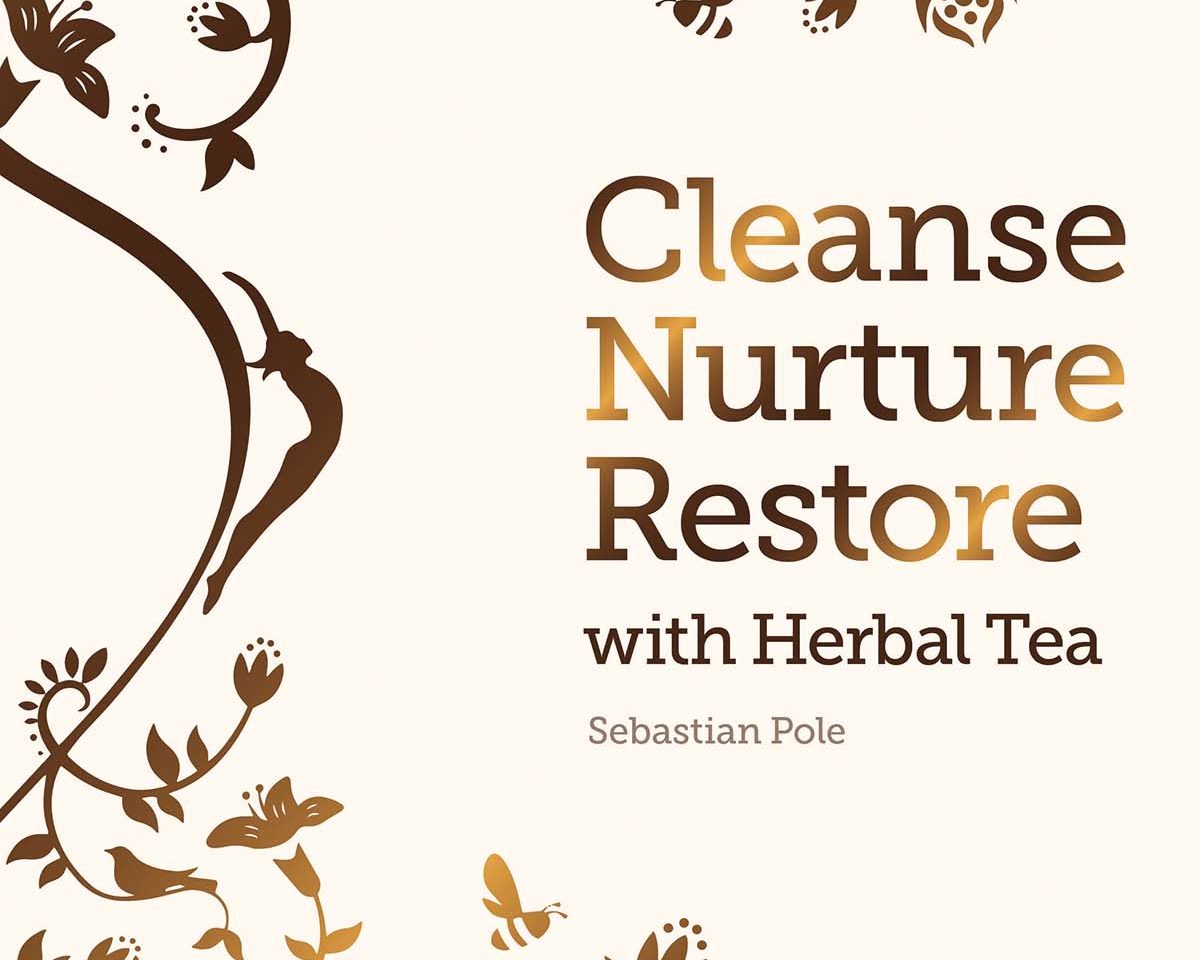
The co-founder of Pukka Herbs has written his latest book.
Cleanse, Nurture, Restore with Herbal Tea is released in January and is designed to teach readers how to harness the power of plants.
The author, Sebastian Pole, is a Master Herbsmith and co-founder of Pukka, and brings together 70 herbal tea recipes using dried and fresh herbs and nature’s finest ingredients for health, wellbeing and flavour.
The book also includes a glossary of ailments and elixirs that provide natural support for all the family.
Pole is a global spokesperson for Ayurvedic living, organic farming and herbal remedies. He is a trained practitioner in Ayurveda, Traditional Chinese Medicine and Western Herbalism, as well as a qualified yoga teacher and therapist. He is the author of A Pukka Life (2011) and Ayurvedic Medicine: The principles of traditional practice (2006).
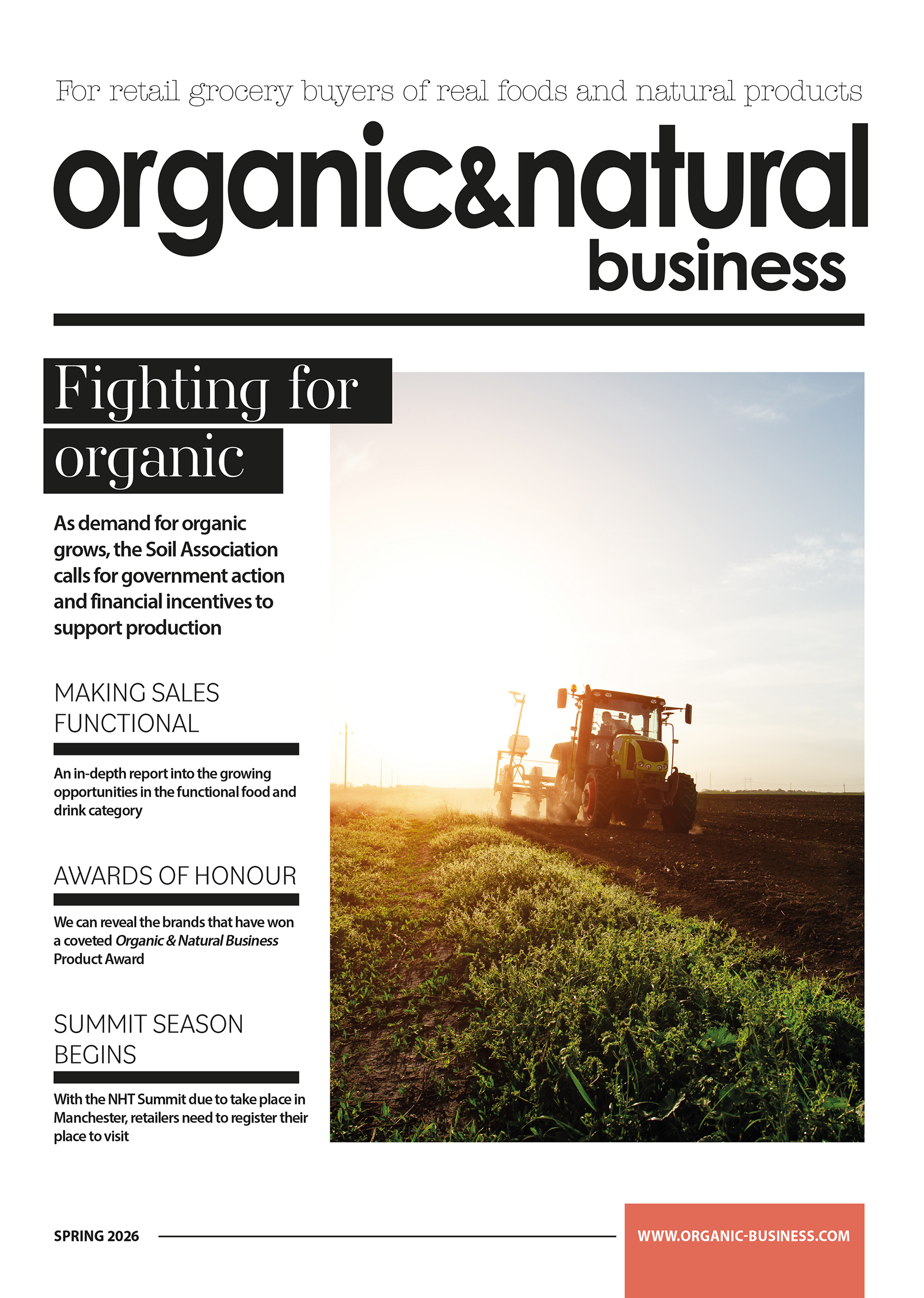


 Organic & Natural Business magazine